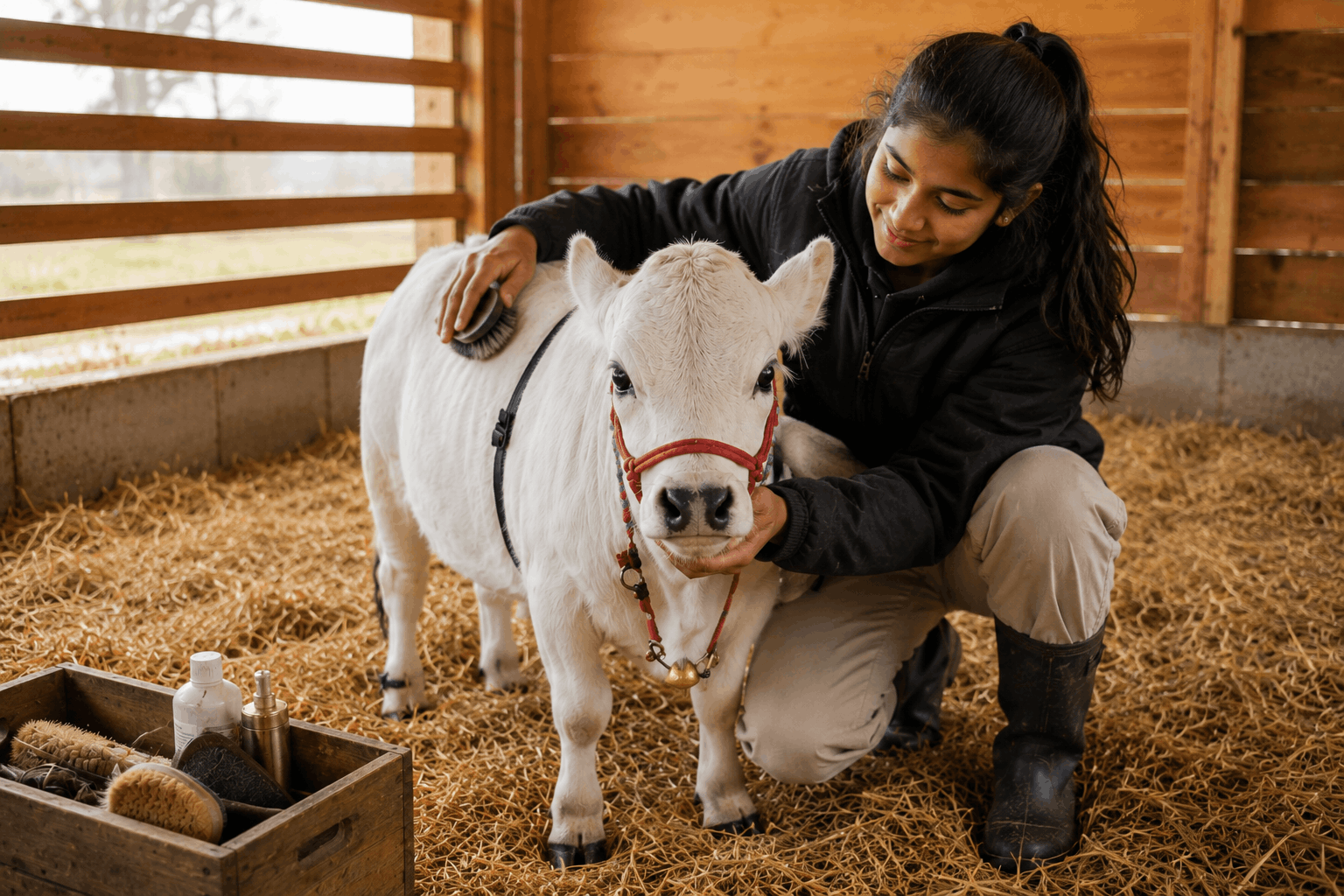
Mini Cow Training How Long Until They Handle Easily?

Just because you have a small-sized cow, do you think it is going to be an easy-to-manage one? Well, think again. Mini cow training requires patience and consistency, even when small cows grow to be docile, well-mannered, and trainable.

So, how long does it take to train a miniature cow to handle?

Most small cows may require a couple of weeks or even months for training. This depends on how old the cow is, its temperament, previous contact with people, and handling frequency.

When Should You Start Training?

It becomes easier for one to develop better handling techniques the sooner you do it. Young calves, which have had constant interactions with humans, may be comfortable, while the older animals may take some more time.

Begin with simple experiences, such as:

  • Soft strokes on the neck, shoulders, and back
  • Giving appropriate treats
  • Putting on the correctly sized halter
  • Taking walks for brief periods
  • Introducing grooming
  • Handling legs and hooves carefully
  • Using gentle and consistent speech

Never rush the process. A frightened cow can react suddenly and may injure itself or its handler.

trained mini cow

How Long Does Mini Cow Training Take?

Socialization training of a miniature cow to handle could be done within 2 to 6 weeks through consistent training sessions. Advanced training can even take months.

A Typical Training Timeline

Week 1–2: Build Trust
Spend time around the cow, speak softly, and use gentle touches. Praise relaxed reactions and do not overwhelm the animal.

Week 3–4: Introduce Handling
Start lessons of haltering and leading. Teach standing quietly for being groomed and examined.

Month 2–3: Expand Skills
Walking should be practiced in various areas, as well as working with the horse’s ears, legs, and hooves. New stimuli should be introduced gradually.

3+ Months: Reinforce Good Behavior
Keep on working and exposing your cow to different environments, people, noises, and everyday tasks around the farm.

What Makes Mini Cow Training Easier?

Calming temperaments, early socialization, and prior handling make training easier.

Keep it brief – only 10 to 15 minutes long – and make sure you’re consistent. Remember to praise your mini cow if it acts calmly and is obedient. Never shout at it, never hit it, and never give it orders that are inconsistent.

Micro cows

Also, keep in mind that although it may be a miniature, a cow is still livestock and quite a powerful one at that. If you lack experience, seek guidance from a qualified livestock handler.

Miniature Cow for Adoption

If you wish to own a mini cow, know more about its age, temperament, history of health, vaccination, and handling by people before.

Selecting an already trained mini cow will help to ease the process of adaptation since it is accustomed to dealing with humans.

Building trust takes time. You should not hurry things by being too direct with your mini cow. Take your time using gentle and consistent handling until you build its confidence and make it more comfortable and approachable.

References Link: https://www.sciencedirect.com/science/article/pii/S0022030224012074

What Makes Mini Cow Breeds Different From Ordinary Cattle?

Would you like to have the beauty of the cows without necessarily owning large pieces of land? Then mini cow breeds may be the perfect choice for you. The reason why these mini cows are very popular today is because of their size as well as their friendly nature. Although the mini cows bear some resemblance to the bigger cows, there are some things that make them stand out among other cows.

1. Mini Cow Breeds Have Smaller Sizes

First of all, there is a visible difference regarding size. Miniature cattle are genetically selected to stay much smaller than regular cattle. For that reason, it may become easier to deal with such cattle since they will not take too much space.

Miniature cows need less space and may be quite suitable for small farms and homesteads.

2. Lower Space and Feed Requirements

Common cattle need large grazing fields and a lot of feed. Mini cattle tend to consume less feed compared to common cattle due to their small body sizes.

Nevertheless, it is very important to take into consideration their dietary requirements. Proper feeding, clean water, shelter, and veterinary care are some of the things that they need.

3. Mini Cow Breeds Are Friendly and Manageable

A lot of small cow breeds are noted for being docile and friendly. In addition to that, their size makes interactions like grooming, feeding, and other activities easier.

Of course, each cow’s temper is unique, which means that proper breeding and socialization should still be practiced.

4. Popular Mini Cow Breeds

Miniature cattle differ from one another. This is because there are different types of breeds with various colors, hair types, body structures, and temperaments.

Some popular types include:

  • Micro Miniature Cow
  • Nano Cow
  • Miniature Cow
  • Punganur Cow

Each breed has unique features, and the choice of mini cow is determined by several factors, including the amount of available space.

Are Mini Cows Right for You?

Miniature cows are one of the best options for having the ideal farm; nevertheless, these are livestock animals and cannot be considered oversized pets. Proper feed, fencing, housing, hoof care, vaccinations, and veterinary visits are some of their requirements.

When you are considering adding mini cows to your farm, there are certain things you need to do first.

punganur cow

Looking for Mini Cows?

Looking for that ideal mini cow for your farm? Get in touch with us now! We have a range of mini cows, and we can assist you in finding the perfect one according to your requirements. Whether you want a companion animal or a unique addition to your pastures, you can choose from a variety of mini cow breeds to find the right fit for your farm.

Can Better Mini Cow Care Prevent Health Problems?

In winter, the mini cow requires much more than just being warm they need to be looked after, pampered, and protected. Mini Cow Care can ensure that these docile creatures are taken care of and live happily through each cold day. With proper shelter, nutrition, clean water, and care, your mini cow will live comfortably and safely during the whole winter.

1. Provide Warm Shelter With Proper Mini Cow Care

Cattle have a comfortable shelter to keep them dry, warm, and away from wet weather and cold winds. The shed should not, however, be totally sealed off as there is a need for good air exchange to lower humidity and keep the air quality good.

Farmers should ensure:

  • Dry and clean bedding
  • Strong wind protection: Water flow protection from strong winds.
  • Proper Ventilation
  • It is spacious enough to allow a comfortable lying position.
  • Dry ground with no excess moisture

2. Consume healthy foods.

Cattle may need extra energy from the winter to keep warm. They can obtain their energy requirements and general wellbeing from a balanced diet.

Include:

  • Good quality hay and feed.
  • Appropriate concentrates
  • When fresh green feed is available:
  • Vitamins and Minerals
  • Proteins can be consumed in appropriate quantities through reading the nutrient label.

Feeding should be carried out using fresh and clean feed at scheduled times.

3. Providing Clean Drinking Water

Proper drinking water should be provided to animals during winter. Animals will not be able to drink dirty and cold water.

Healthy Feeding

Monitor water sources daily and maintain water sources clean and easily accessible all day.

4. Include Health Checks in Mini Cow Care

Existing health issues may be more apparent during the cold weather. Changes can be identified early through continuous monitoring.

Be alert to the following:

  • Decreased appetite
  • Coughing and breathing problems
  • Constant shivering
  • Lack of strength and vitality
  • Other sources of change in milk yield should also be considered.

Should there be any cause for concern, please visit a veterinarian.

5. Clean the Bedding and Shed.

Dirty bedding is not comfortable for the animals, and it makes them susceptible to cold and wetness. Thus, the bedding should be clean and dry.

A better hygiene status also contributes to a healthier herd.

Cow care Grooming

6. Build a Healthy Routine for Mini Cow Care

Cattle, especially, appreciate routine and find their lives much easier with some sort of schedule. Having a consistent feeding and milking routine, cleaning and health-check routine can minimise unnecessary disruption.

Conclusion

Winter Care for Dairy Cattle is more than just protection from cold temperatures. Comfortable living space, good food, good water supply, cleanliness and routine checkups – all will have a positive effect on the health of the herd during the winter months. With such an approach to work, farmers can secure themselves against potential problems.

Learn More with TheMiniCow

Want more practical knowledge on cattle husbandry, mini cow breeds, nutrition, disease management, and responsible management? Check out TheMiniCow for tips and advice for cow owners and enthusiasts. Improve the safety and comfort of your cattle and make winter a better experience by implementing informed Winter Care for Dairy Cattle practices.

References Link: https://briscoeranchfarm.com/how-to-care-for-mini-cows-housing-feeding-and-health-checklist/