

How Seasons Affect Serum Enzymes in Punganur Breeds?
India has various climates, which have influenced the development of different indigenous cattle breeds through time. The Punganur cow from the state of Andhra Pradesh in India is one such example of a unique and indigenous breed, making Punganur breeds important to understand and preserve
However, seasonal variations may affect the internal processes of the organism’s body. There are ways through which scientists can learn more about these seasonal variations. They can do this through the analysis of serum enzymes.
Why Study Serum Enzymes in Punganur Breeds?
Blood biochemical analysis may be used by scientists to determine the health, nutrition, and physiological state of animals. Some of the enzymes that may be tested through biochemical studies include AST, ALT, ALP, and GGT.
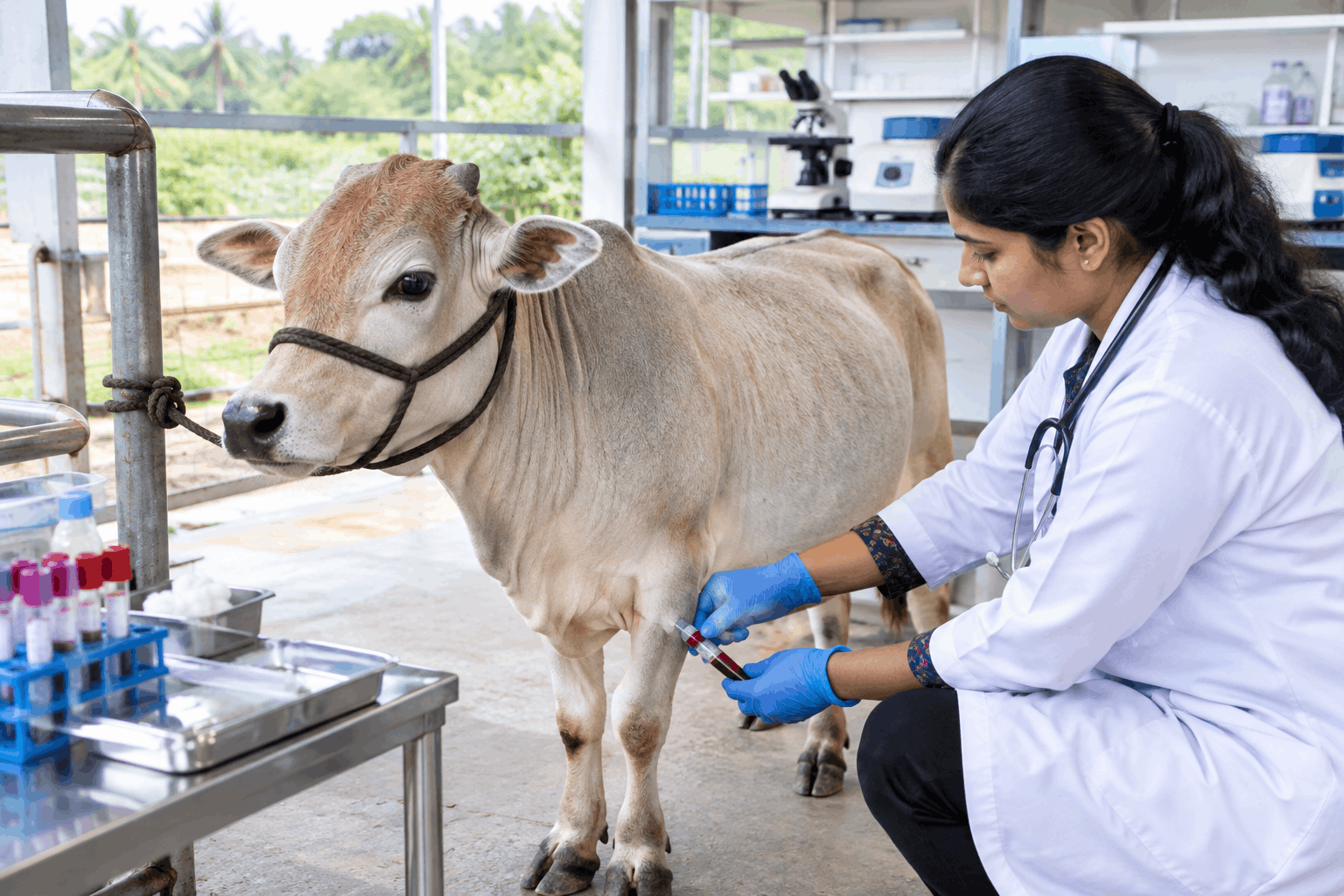
A study was done on 60 healthy-looking Punganur cattle, comprising 30 males and 30 females, in summer, monsoon, and winter seasons.
The study observed that:
- Summer had the highest THI, which shows that heat stress was high.
- Activity of AST was high in summer compared to winter.
- Levels of ALT were also high in summer compared to winter.
- Activity of ALP was high in summer compared to winter.
- GGT showed no significant change in the three seasons.
- Similar seasonal variations were observed in both males and females.
What Do These Changes Tell Us?
Results indicate that the environment has a role to play in affecting serum enzyme activities in Punganur cattle. This is indicated by the high levels of AST, ALT, and ALP seen during the hot season.
Significantly, it is highlighted that it is necessary to have breed- and environment-based references and not just use the data generated from different environmental conditions.
Protecting the Punganur Breed
Punganur cattle are an invaluable genetic resource in southern India. Endangering the existence of Punganur cattle would mean endangering not just an animal species, but an invaluable aspect of India’s agricultural heritage as well.

How Can We Give Punganur Breeds a Safe Future?
You can be a part of Punganur cow preservation by adopting the cows in a responsible manner. Adopting a Punganur cow would help give this animal protection, good nutrition, proper veterinary care, and overall daily maintenance.
Adopt your Punganur cow through Minicow and be a part of preserving this rare indigenous breed.
One adoption can help preserve a legacy for generations to come.
References Link: https://livestockscience.in/wp-content/uploads/Punganur-cattlef.pdf